When people think about painting, they often focus on choosing colours. But in reality, a beautiful paint finish starts long before the first coat of paint is applied.
One of the most common things we hear from homeowners, builders, and property managers is:
“The drywall is finished, but the walls don’t look right.”
The truth is that painters are often the last trade to work on a project, which means we’re also the ones who discover—and fix—many of the imperfections left behind by previous trades.
Here’s a closer look at some of the most common issues we encounter and why proper preparation makes all the difference.
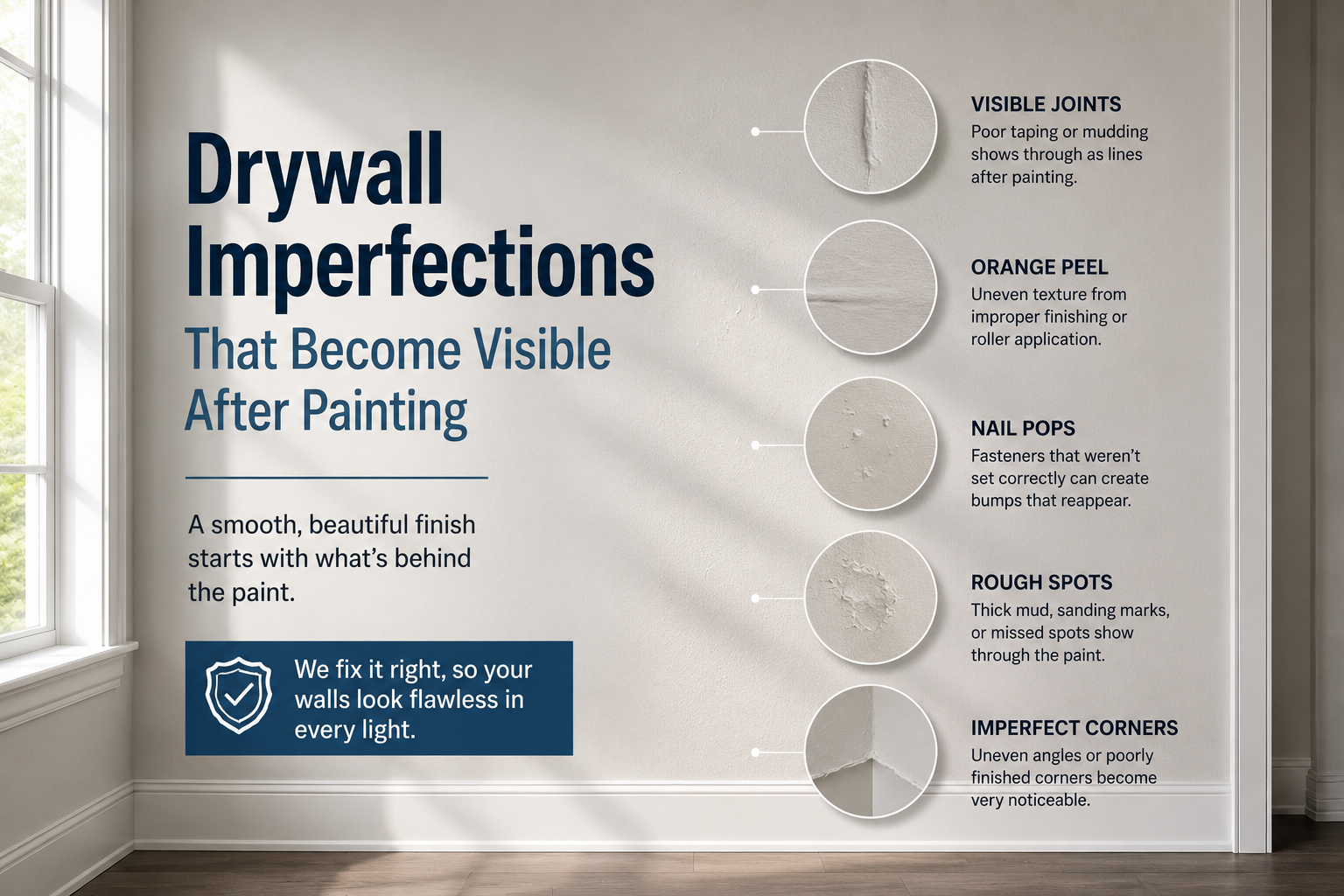
Drywall Imperfections That Become Visible After Painting
Fresh drywall can look perfectly smooth at first glance. However, once paint is applied—especially in rooms with lots of natural light—even minor imperfections become much more noticeable.
Some common drywall issues include:
Uneven joints
Visible seams
Poorly feathered mudding
Sanding marks
Nail or screw pops
Corner bead imperfections
Surface waviness
Many homeowners don’t notice these flaws during construction because drywall compound and primer can hide them temporarily. Once the final paint colour goes on, especially darker shades or finishes with any sheen, these imperfections can suddenly stand out.
We’ve walked into countless projects where clients say:
“We didn’t notice that before the walls were painted.”
That’s because paint doesn’t hide flaws—it highlights them.
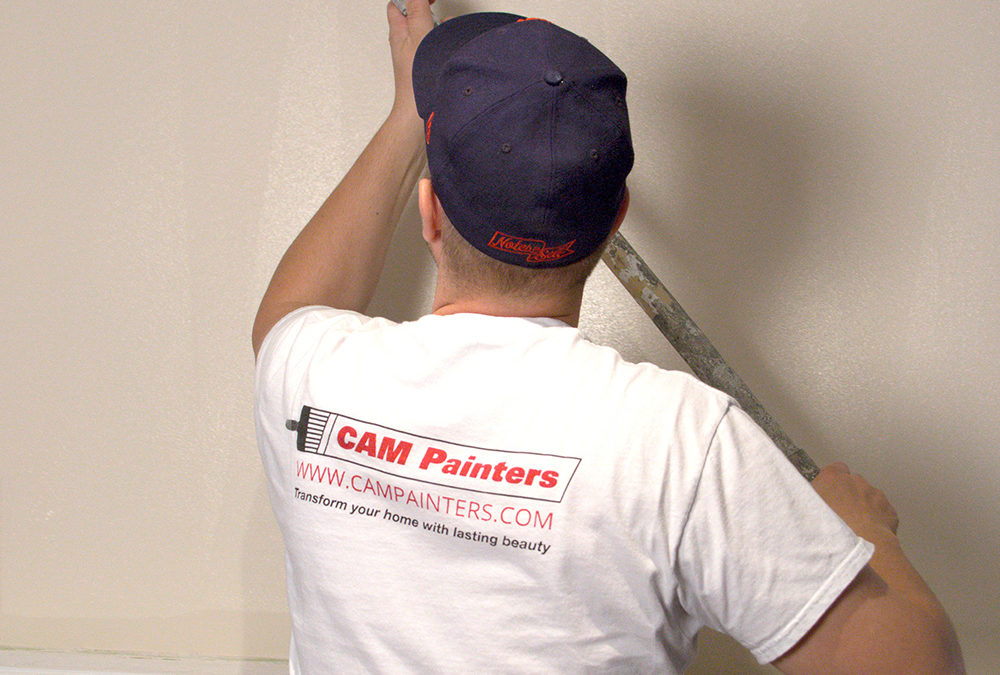
A professional painter spends time inspecting every surface before painting begins. Small corrections made early can dramatically improve the final appearance of the room.
Damage Caused During Construction
Even when drywall work is completed properly, other trades often continue working throughout the project.
Electricians install fixtures.
Plumbers complete finishing work.
Cabinet installers move large materials through hallways.
Flooring crews bring equipment in and out of rooms.
As a result, walls and ceilings frequently suffer small amounts of damage before painting is completed.
We regularly repair:
Dents and dings
Scratches
Gouges in drywall
Damaged corners
Scuffed surfaces
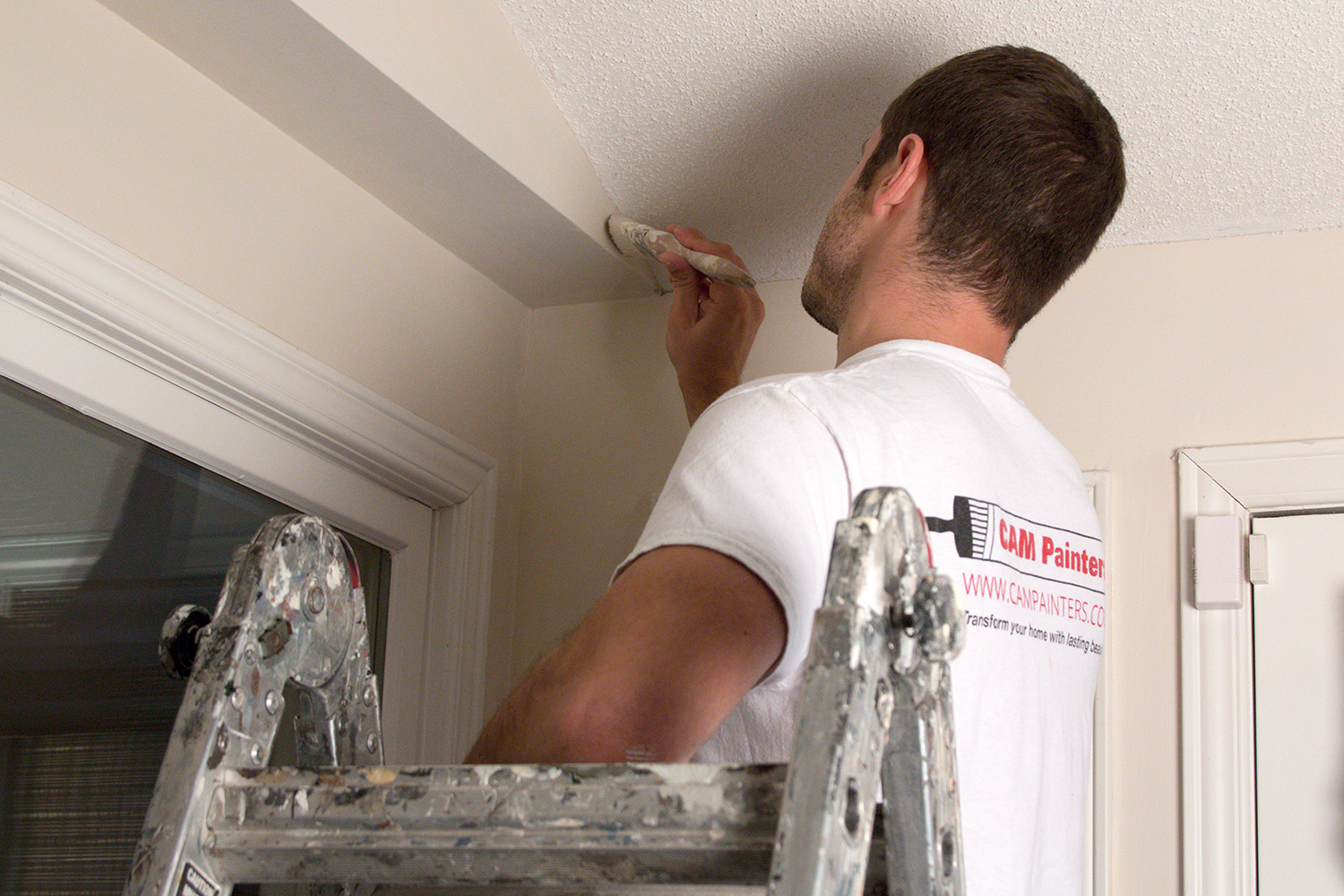
Ceiling repairs around light fixtures
Holes left from changes during construction
These issues may seem minor individually, but together they can significantly affect the finished appearance of a home or commercial space.
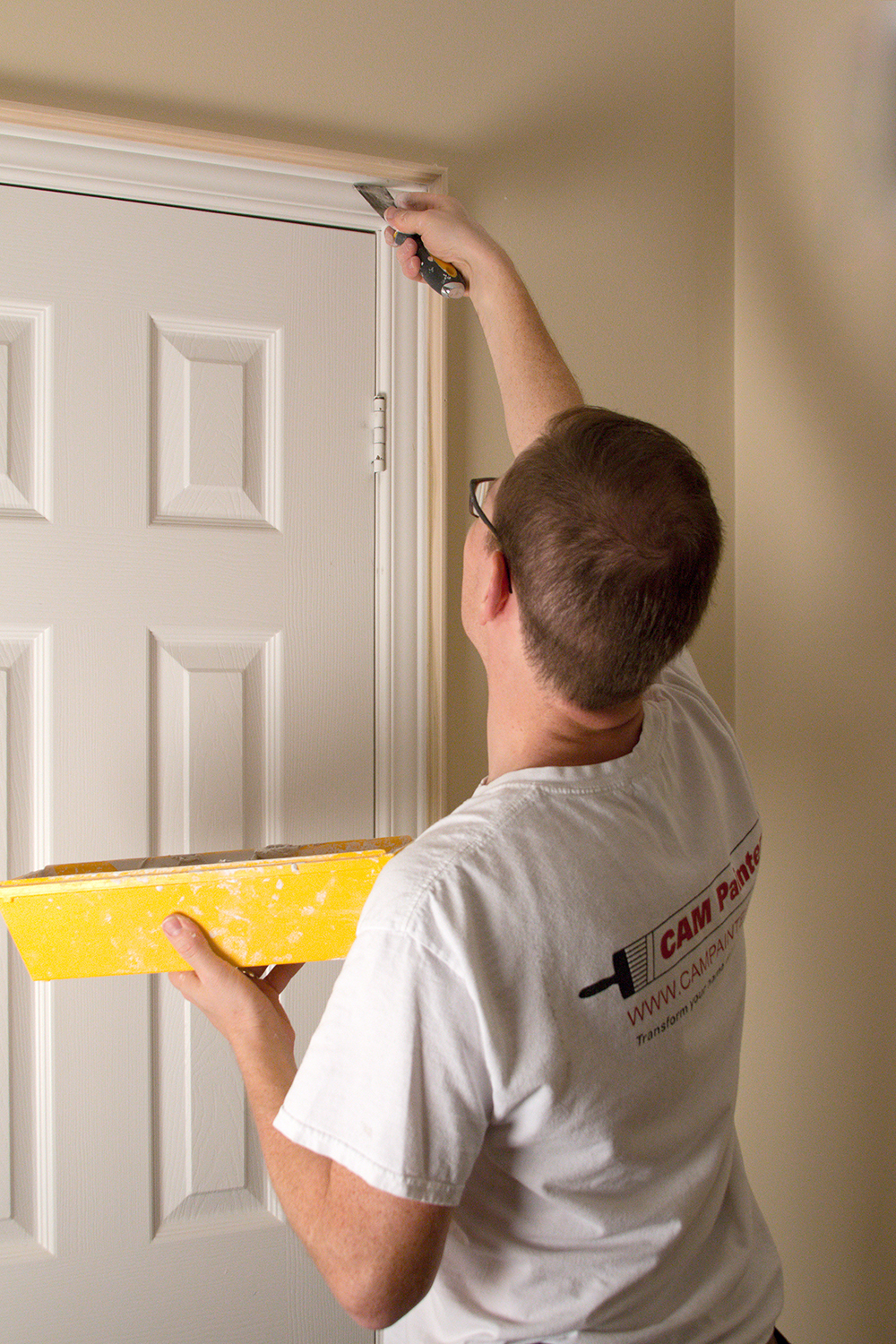
Before painting, we carefully inspect all surfaces and make necessary repairs so the final result looks seamless.
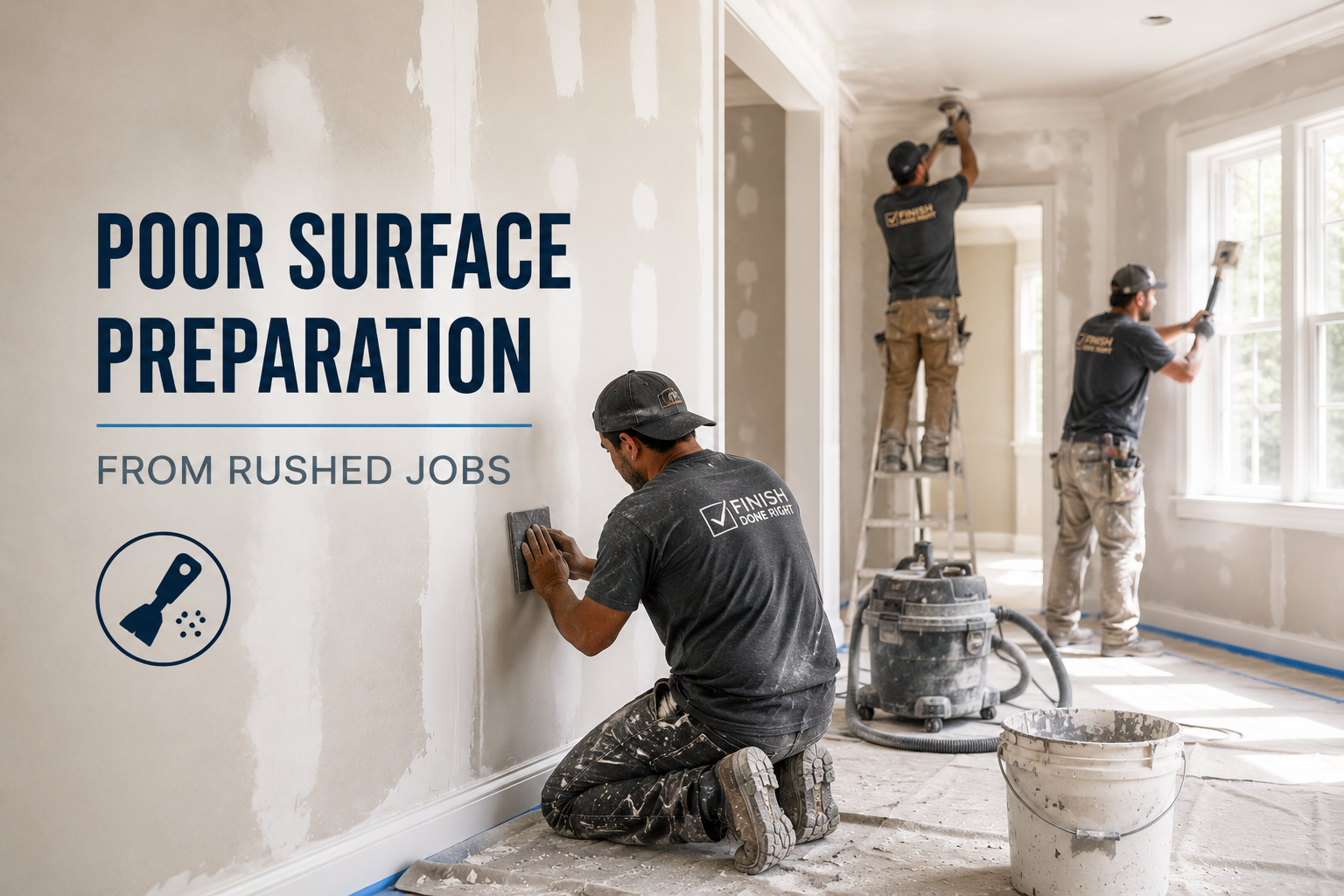
Poor Surface Preparation From Rushed Jobs
In today’s fast-paced construction environment, deadlines can sometimes take priority over quality.
When projects are rushed, preparation is often the first thing sacrificed.
Unfortunately, no amount of premium paint can compensate for poor prep work.
Some examples we commonly encounter include:
Dust left on surfaces
Incomplete sanding
Poor patch repairs
Unfilled nail holes
Uneven caulking
Paint applied over damaged surfaces
Areas that were never properly primed
These shortcuts may save time initially, but they often create problems that become obvious once the project is complete.
Homeowners frequently contact us after noticing:
Rough wall surfaces
Visible patches
Flashing or uneven paint appearance
Peeling paint
Poor adhesion
Inconsistent finishes
Proper preparation may not be the most exciting part of painting, but it is what separates an average finish from a professional one.
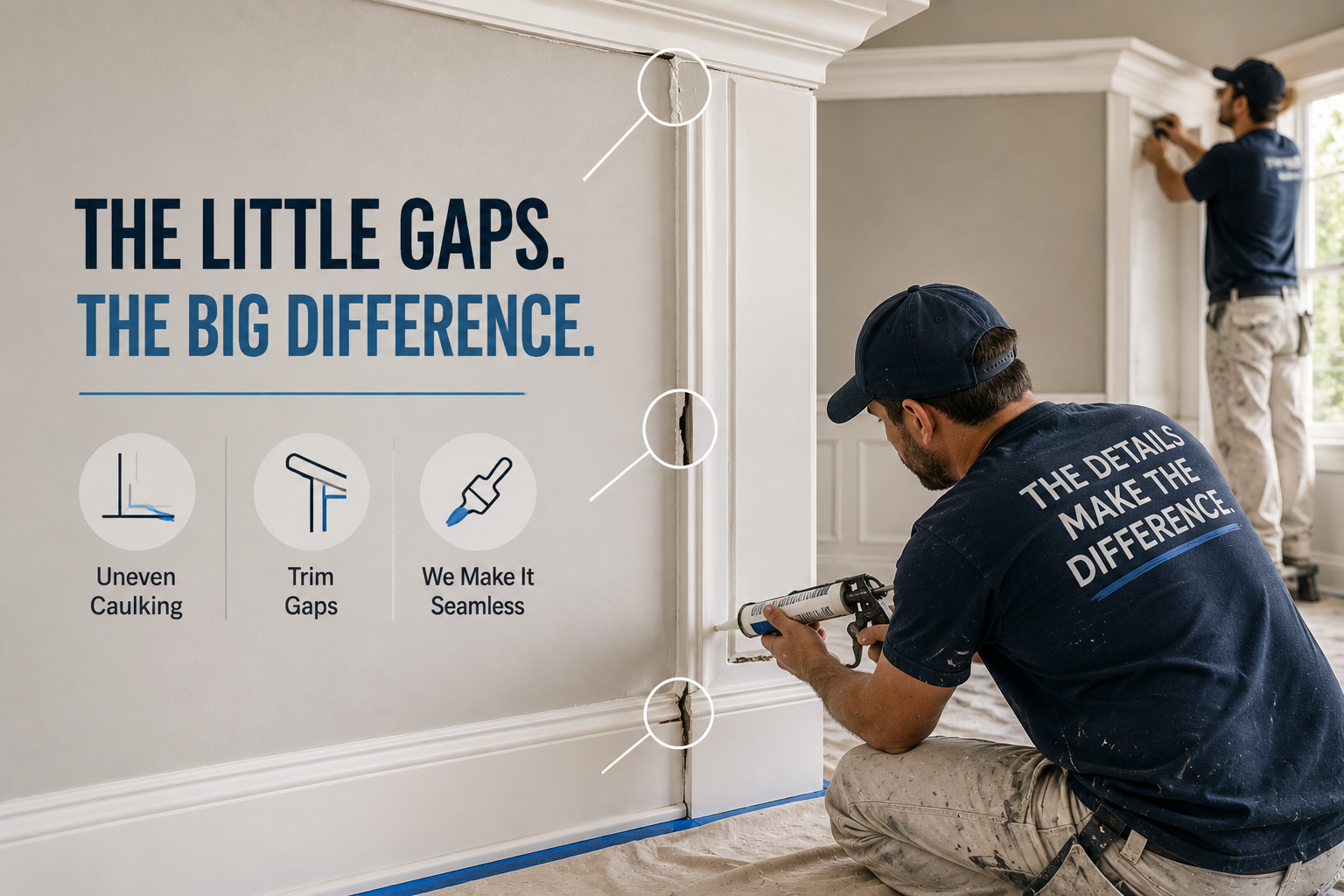
Uneven Caulking and Trim Gaps
Trim work can dramatically enhance a room—but only when the finishing details are done correctly.
We often see:
Gaps between trim and walls
Inconsistent caulking lines
Cracked caulking
Nail holes that weren’t properly filled
Rough trim surfaces
These small details may seem insignificant during construction, but once painted, they can become surprisingly noticeable.
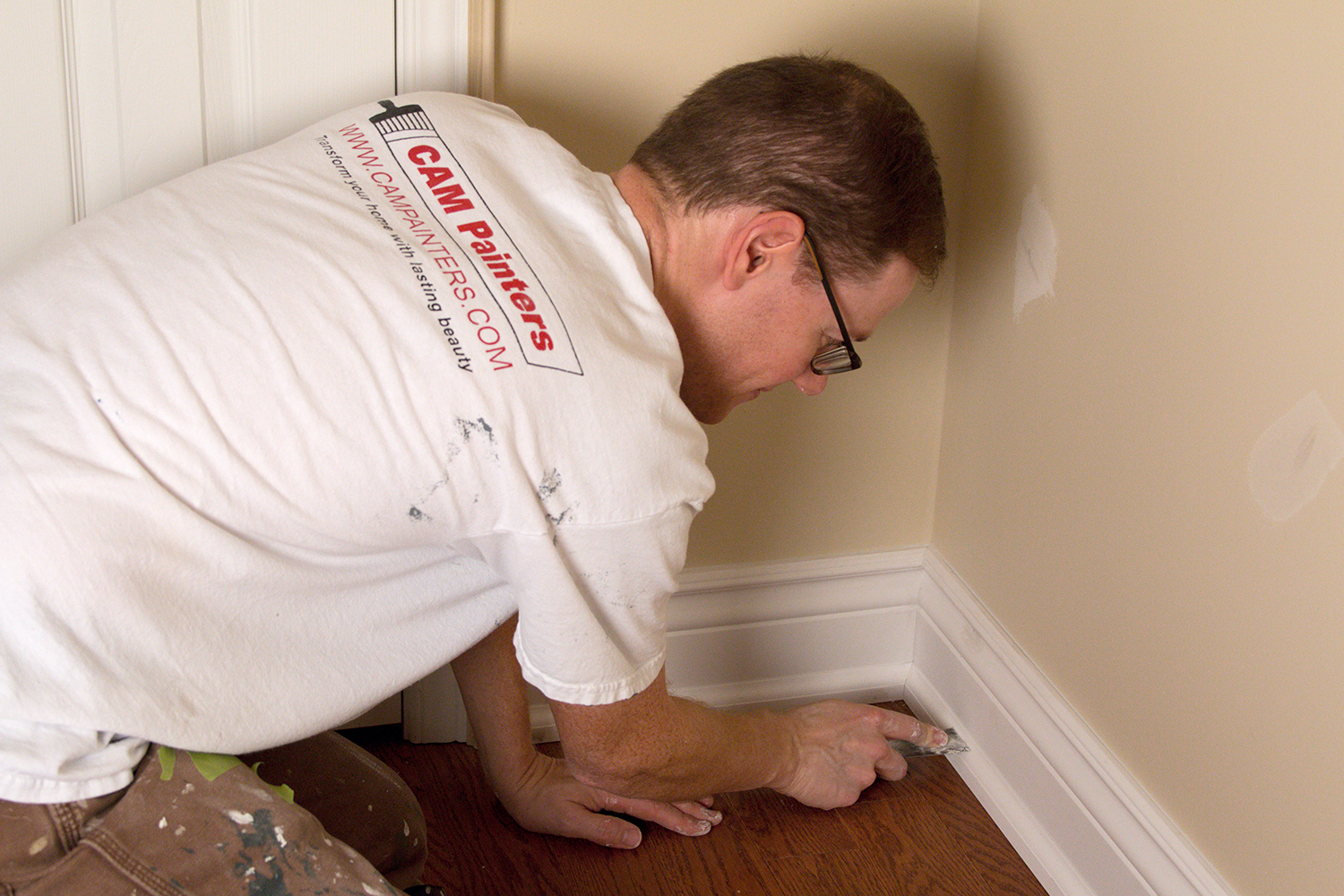
A professional painting team takes the time to fill, caulk, sand, and refine these areas before applying paint, creating crisp, clean lines throughout the space.
Lighting Reveals Everything
One of the biggest surprises for homeowners is how much lighting affects the appearance of walls.
Natural sunlight, pot lights, pendant fixtures, and modern LED lighting can expose imperfections that weren’t visible during construction.
This is especially common in:
Hallways
Staircases
Open-concept living spaces
Large feature walls
Home offices
Rooms with oversized windows
We’ve had clients wonder why a wall looked perfect one day and flawed the next.
The answer is often lighting.
As professional painters, we inspect surfaces under different lighting conditions to identify imperfections before the final coat is applied.
Why Hiring Professional Painters Matters
Many people assume painting is simply about applying colour to walls.
In reality, a significant portion of our work involves correcting, preparing, repairing, and refining surfaces before painting even begins.
The best paint jobs aren’t just about what you see.
They’re about what was fixed beforehand.
A smooth, flawless finish comes from careful preparation, attention to detail, and years of experience identifying issues that others may overlook.
The Bottom Line
Painting is often the final step that brings a project together—but it’s also the stage where hidden imperfections become visible.
Whether it’s drywall flaws, construction damage, rushed preparation, or finishing details that were overlooked, professional painters frequently play a key role in correcting issues left behind by previous trades.
The result is a cleaner, smoother, and more polished space that homeowners, builders, and business owners can be proud of.
Need Help Getting Your Project Finished the Right Way?
At CAM Painters, we don’t just paint walls—we help ensure every surface looks its absolute best before the first coat goes on. If you’re planning a renovation, new build, office refresh, or home update, our team is here to deliver the professional finish your project deserves.
Contact us today for a free estimate and see the difference proper preparation can make.
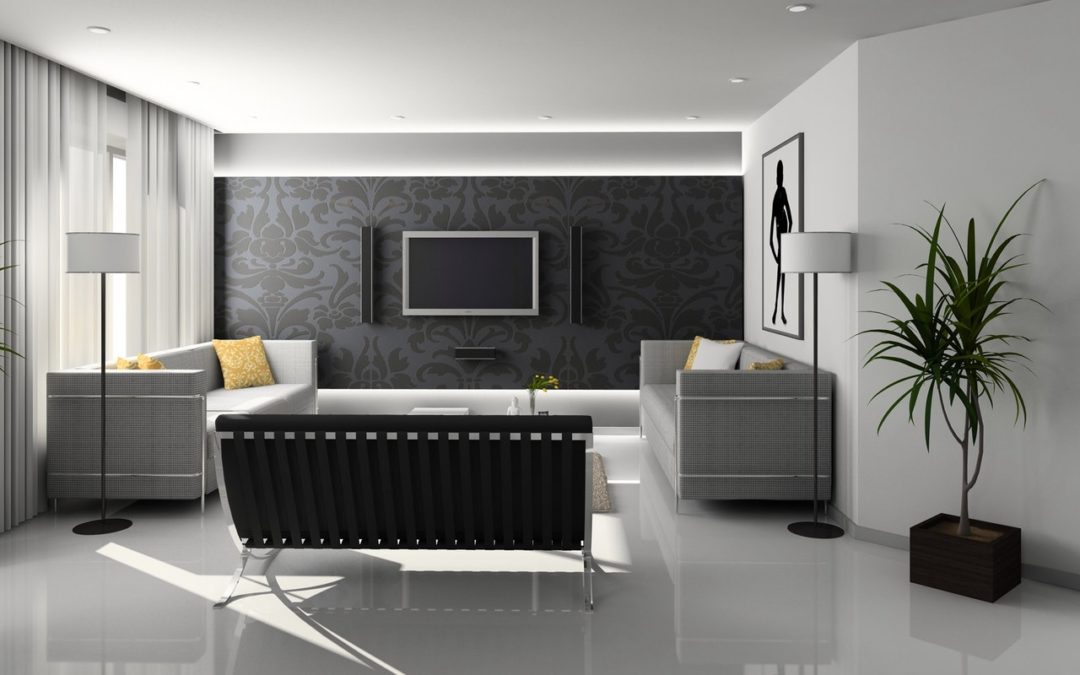
Many people like to have wallpaper installed on the same wall as their TV is mounted, which is a great look for your Toronto home. But this begs the question, should you have the wallpaper installed first, or the TV mounted to the wall first?
To answer this question we have guest blogger Gordon Cameron from TEC.works taking us through the process of installing a TV wall mount on a wall that will be wallpapered. We don’t want any extra holes put in our wallpapered wall for fishing wires, so here is Gordon’s fool-proof method for ensuring a properly positioned TV that keeps all wallpaper intact:
Getting exactly the right position for a flat panel TV installation requires some planning up front.
Is the screen the right viewing height from your favourite chair?
How many other people join you for movie night, and where will they be sitting?
What about a sound bar? Sound bars typically work best mounted below the screen, but this could push the screen height up if there is a mantle. Speaking of sound, have you sorted the EARC (https://www.hdmi.org/spec21Sub/EnhancedAudioReturnChannel)? If you want good quality audio and depth, EARC is vital.
How are all the wires for the HDMI inputs, power and possibly an optical cable run from AV components to the TV? How will they be concealed? Do you need to buy some heatshrink sleeving for the cables?
You can get answers to some of these questions with a measuring tape, or even a masking tape outline on the wall. But there is no substitute for actually lifting the TV into the approximate position to get a feel for how it will fit with the room. Each of these tape outlines or temporary lifts is an opportunity to scuff up a beautiful wallpaper job. Here is what I’d recommend to get the TV installed where you want it, without damaging the wallpaper:
Determine the desired location for the TV, and then decide what sort of wall mount makes most sense. TV wall mounts can be mounted flat against the wall, tilt out a few degrees from the top, or even swivel and tilt. It all depends on your room and seating.
Mark the studs, install the desired wall mount and then hang the TV
Run all the cabling. Often there are several HDMI cables, power and possibly optical cables, and they all need to be concealed.
Once you are satisfied with the installation, remove the cabling and the TV
Loosen bolts or screws and lags and remove the wall mount
Have CAM Painters work their magic with the wallpaper installation
Install wall mount again into existing holes or lags
Install and level the TV
Rerun and conceal all the cabling
Order pizza and enjoy the movie!
Thanks Gordon for the great advice! Here’s a little information about TEC.works:
At TEC.works, we help solve technology headaches for consumers and small businesses. That might mean reviewing consumer bills for cell phones, Internet, TV packages, or home phones and finding less expensive options that are a better fit for your needs. It might mean installing a home theatre system, or a presentation screen in a retail outlet. It might mean troubleshooting WiFi signal strength in a dead spot at your home or business. We’ll find the right technology products or services for you, and then manage them professionally. Because you’ve got better things to do with your time.
So if you’re planning on having a TV and wallpaper on the same wall, why don’t you book a quote? With both us and TEC.works it will be a seamless process! Transform your home with lasting beauty!
So you’re planning on renovating your Toronto home?
CAM Painters can help! Everybody loves a bit of home renovation, and the beauty in it is that there are so many ways you can go about renovating your home, even if it is just investing in new interior doors as you’re not really into the old design anymore or having new windows put in. Whether this is through installing a home security camera external or renovating a certain room, there are so many ways to improve a house. However, we believe that painting is at the heart of all home renovation projects! Especially if you like many have decided to get your house painted after replacing doors or windows or add an addition to your house using somewhere like www.majesticdesigns.co.uk. Not only can we do the painting, we can recommend the sequence of painting so that it’s done as efficiently as possible.
Step 1: After the drywall has been installed, taped and plastered
Prime walls and ceilings, Paint ceilings, Prime and Paint trim while it’s loose
Once the place has been drywalled, taped and mudded it’s a perfect time to have us in to prime and paint the ceilings. Ideally this can be done before flooring goes in. As an added bonus, if the trim and casings are onsite, we can prime and get a coat on those before they are installed.
The benefit of getting the ceiling and walls primed early on in the renovating process is that if there are any deficiencies by the drywallers, these can be seen and rectified. It’s better to have these deficiencies fixed before the floors, trim and other finishes go in.
Getting a coat of primer and paint on the trim while it is loose is more efficient than after it’s installed, so it saves time, which in turn saves money.
Step 2: After flooring and trim has been installed
The next phase of renovating would be to have us in after the flooring and trim has been installed.
This phase would consist of the following:
Filing nail holes in the trim
Caulking gaps between the trim and the wall
Painting the walls – 2 coats
Painting the trim – it already has 1 coat, so it just needs the final coat
At this point the project would be complete, except for touch ups
Step 3: Final touch ups after move in
Although most movers are careful, there is always some wear and tear from moving furniture back into a home. So we recommend allowing for a day of touching up the paint, which can be scheduled shortly after you move in.
Final thoughts to consider when planning your renovation
You should allow enough time in your renovation schedule that painting can occur when there are no other trades. As careful as other trades are, the more of them that are onsite, the more damage that is likely to happen to the paint.
Your contractor should ensure that the HVAC system is running properly prior to having any painting. If a house is too cold, or too dry, it can have a negative impact on how the paint dries. If your HVAC system isn’t working then you need to hire a professional who can help Repair Air Conditioning & Heating System for you.
Your contractor should also ensure that there is a laundry sink and that water is available to use. We need water to clean brushes, mix patching compound and wet rags to clean off surfaces.
Also, please make sure your contractor has the wood casings and trim are on site a week before painting starts. This allows the wood to acclimatize to the house and do any expansion or contraction before primer and paint is applied.
If you’d like to have CAM Painters handle the painting portion of your renovation project why don’t you book a quote? We’d be happy to Transform your home with lasting beauty!