
You just spent time and money giving your home a fresh new look. The walls looked smooth, the colour was perfect, and everything felt brand new.
Then, a year or two later, you start noticing scuffs, peeling, fading, cracking, or areas where the paint simply doesn’t look as fresh as it once did.
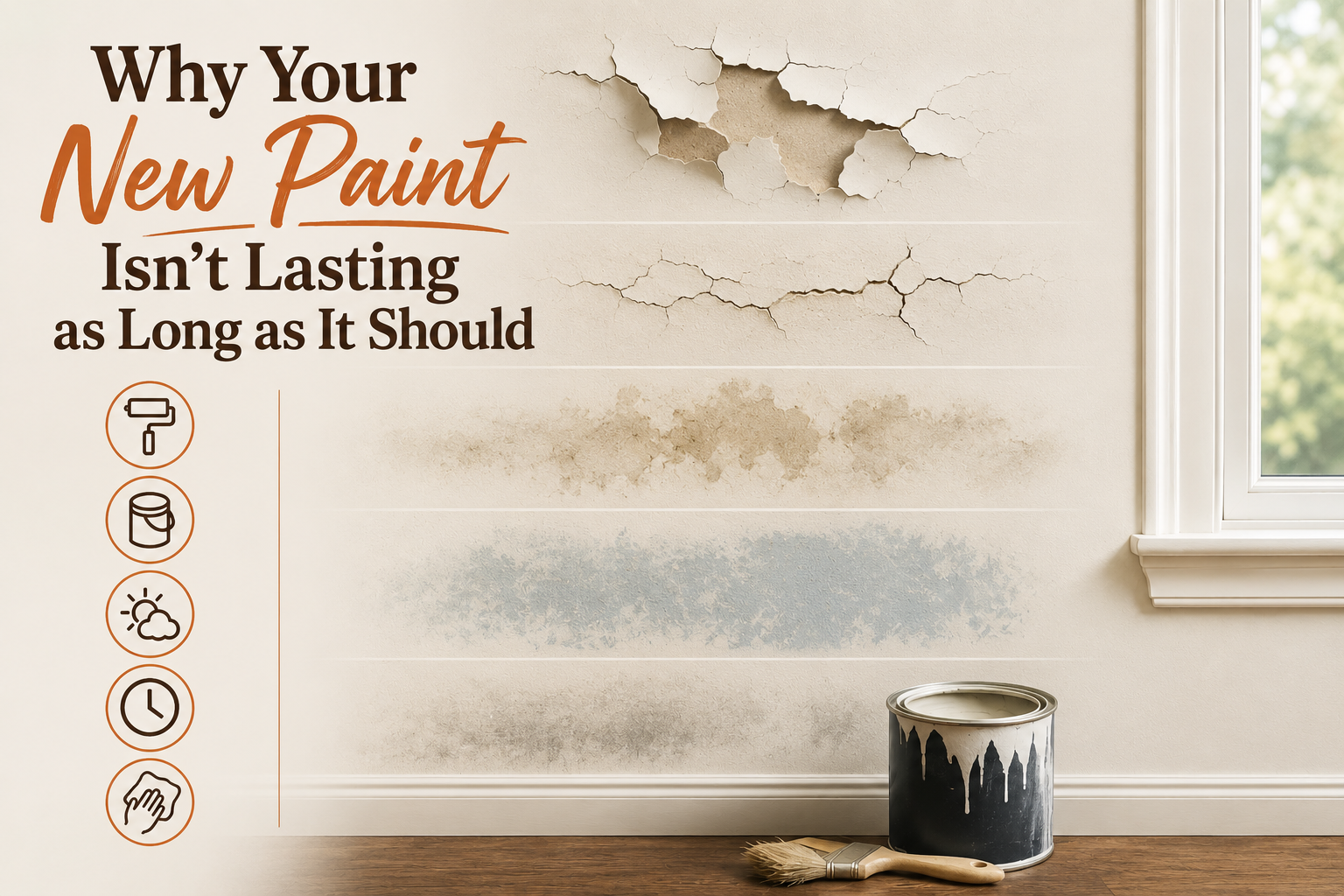
So, what happened?
The truth is, good paint is only part of the equation. How long your paint job lasts depends on much more than the product that goes on the wall.
At CAM Painters, we believe the difference is in the prep — and understanding what can cause paint to fail can help you protect your investment.
The Surface Wasn’t Properly Prepared
One of the biggest reasons paint doesn’t last is simple: the surface wasn’t ready for paint.
Painting over dirt, dust, grease, loose paint, cracks, or damaged surfaces can prevent the new coating from properly bonding.
Professional preparation may include:
- Cleaning and degreasing surfaces
- Filling holes and cracks
- Sanding rough or uneven areas
- Removing loose or peeling paint
- Caulking gaps and joints
- Priming when necessary
A beautiful finish starts long before the paintbrush or roller touches the wall.
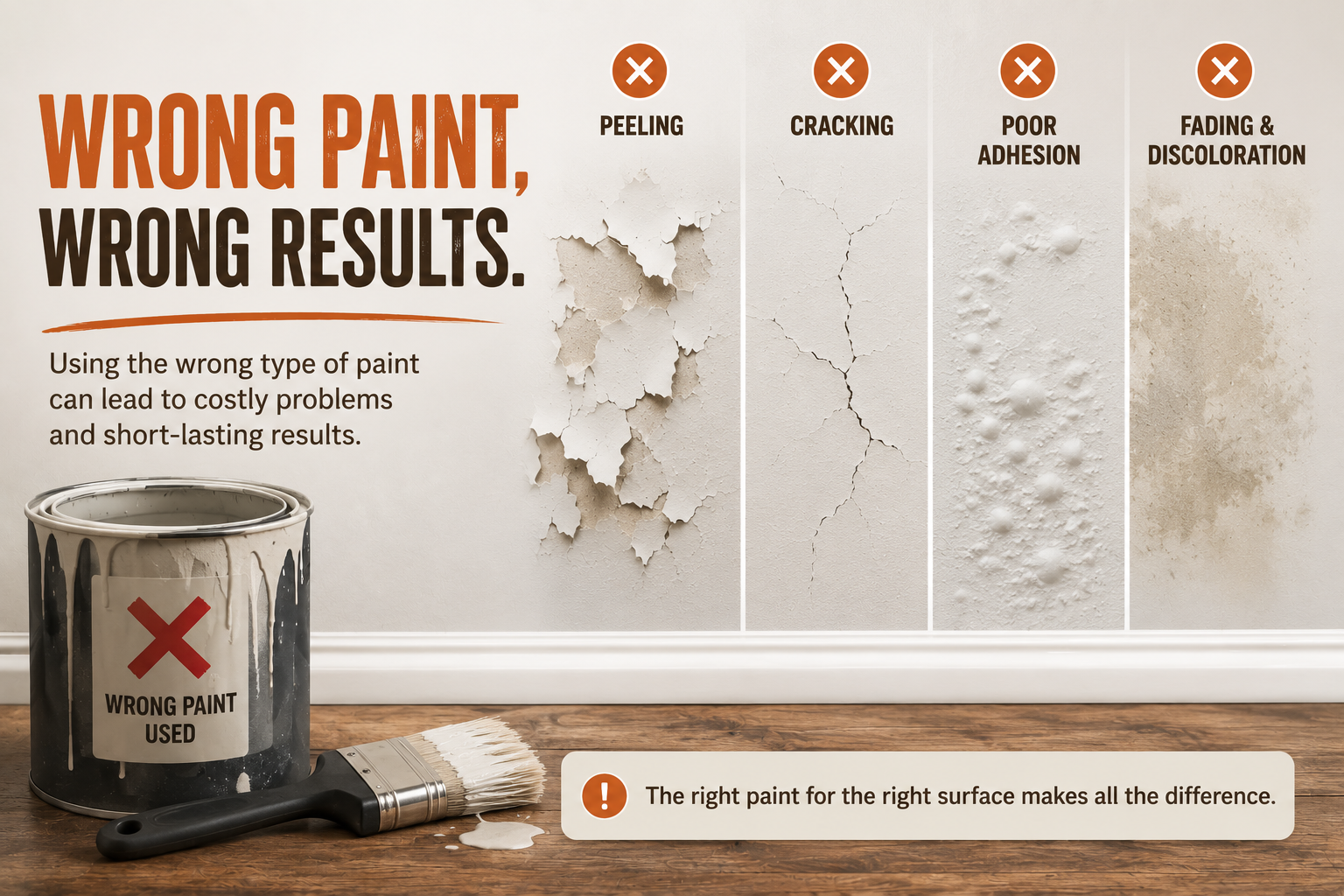
The Wrong Paint Was Used
Not every paint is designed for every surface or room.
A busy hallway, kitchen, bathroom, bedroom, exterior wall, and trim all have different demands.
For example, areas exposed to moisture, frequent cleaning, heavy traffic, or sunlight may require a coating specifically suited to those conditions.
Choosing paint based only on colour or price can lead to premature wear.
The right product for the right surface can make a significant difference.
Primer Was Skipped When It Was Needed
Primer isn’t simply an extra step designed to increase the cost of a project.
In the right situation, primer can improve adhesion, help create a more uniform surface, block stains, and provide a better foundation for the finish coats.
It can be particularly important when dealing with:
- Bare drywall
- Fresh repairs
- Stains
- Porous surfaces
- Significant colour changes
- Certain previously painted surfaces
Skipping primer when it’s needed can compromise the entire paint system.
Too Much Paint Was Put on Too Quickly
More paint doesn’t necessarily mean a better or longer-lasting finish.
Applying thick coats or recoating before the previous layer has properly dried can create problems with adhesion, curing, and the overall finish.
Professional painters understand that drying time and curing time aren’t always the same thing.
Patience between coats can be just as important as the application itself.
Moisture Could Be Hiding Behind the Problem
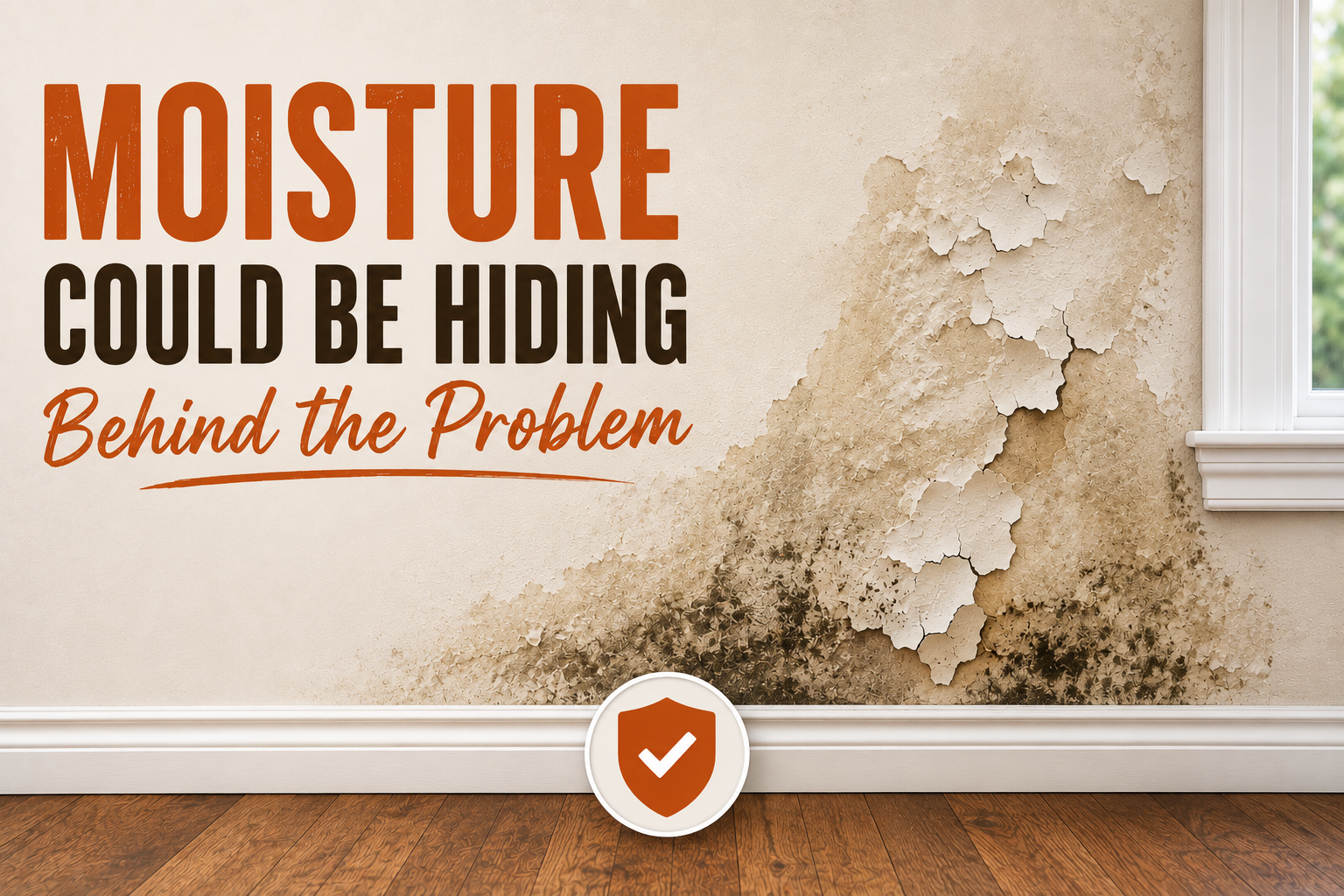
If paint is bubbling, blistering, peeling, or repeatedly cracking, the paint itself may not be the real problem.
Moisture can come from:
- Leaks
- Condensation
- Poor ventilation
- Exterior water intrusion
- Plumbing issues
- High humidity
Painting over a moisture problem may make the wall look better temporarily, but it won’t solve the underlying issue.
If the cause isn’t addressed, the paint failure can come right back.
Your Home Experiences More Wear Than You Realize
Paint has to withstand everyday life.
Kids, pets, furniture, cooking, cleaning, sunlight, humidity, and constant traffic all take their toll.
High-touch areas such as hallways, staircases, doors, baseboards, and kitchens can naturally show wear sooner than quieter areas of the home.
That’s why choosing the appropriate finish and product for the space matters.
Exterior Paint Has an Even Tougher Job
Exterior paint has to deal with Toronto’s changing seasons.
Sun, rain, snow, temperature swings, moisture, and freeze-thaw cycles can all affect an exterior coating over time.
If the surface wasn’t properly prepared, if moisture is present, or if the wrong product was used, premature peeling and fading can occur.
A long-lasting exterior paint job starts with understanding the surface and the environment — not simply choosing a colour.
The Real Secret to Long-Lasting Paint?
Preparation.
It’s easy to focus on the colour because that’s what you see.
But the work underneath the colour is what helps determine how that finish performs over time.
Cleaning.
Repairing.
Sanding.
Priming.
Caulking.
Choosing the right products.
Applying the right number of coats.
Allowing proper drying and curing time.
These details may not be the most exciting part of a painting project, but they’re often what separate a finish that looks good temporarily from one that’s built to last.
Before You Blame the Paint, Look at the Process
If your new paint is already peeling, cracking, bubbling, fading, or wearing unusually quickly, don’t automatically assume you bought the wrong paint.
Ask:
Was the surface properly prepared?
Was the right product selected?
Was primer necessary?
Were the coats applied correctly?
Could moisture or another underlying issue be involved?
The answers can reveal much more than the paint label alone.
At CAM Painters, We Paint for the Long Run
At CAM Painters, we don’t believe in simply covering a wall with a new colour.
We take the time to understand the surface, identify potential problems, complete the necessary preparation, and select products suited to the project.
Because prep work makes the paint work.
And when you invest in repainting your home, you shouldn’t have to wonder how long the finish will last.
You should be able to enjoy it.
Thinking about repainting your home?
Before choosing a colour, let’s make sure your walls are ready for it.
📞 Call CAM Painters at (416) 499-6120
📧 info@campainters.com
Let’s create a finish that looks beautiful today — and is built to stay that way.