


When people think about painting, they often focus on choosing colours. But in reality, a beautiful paint finish starts long before the first coat of paint is applied.
One of the most common things we hear from homeowners, builders, and property managers is:
“The drywall is finished, but the walls don’t look right.”
The truth is that painters are often the last trade to work on a project, which means we’re also the ones who discover—and fix—many of the imperfections left behind by previous trades.
Here’s a closer look at some of the most common issues we encounter and why proper preparation makes all the difference.
Drywall Imperfections That Become Visible After Painting
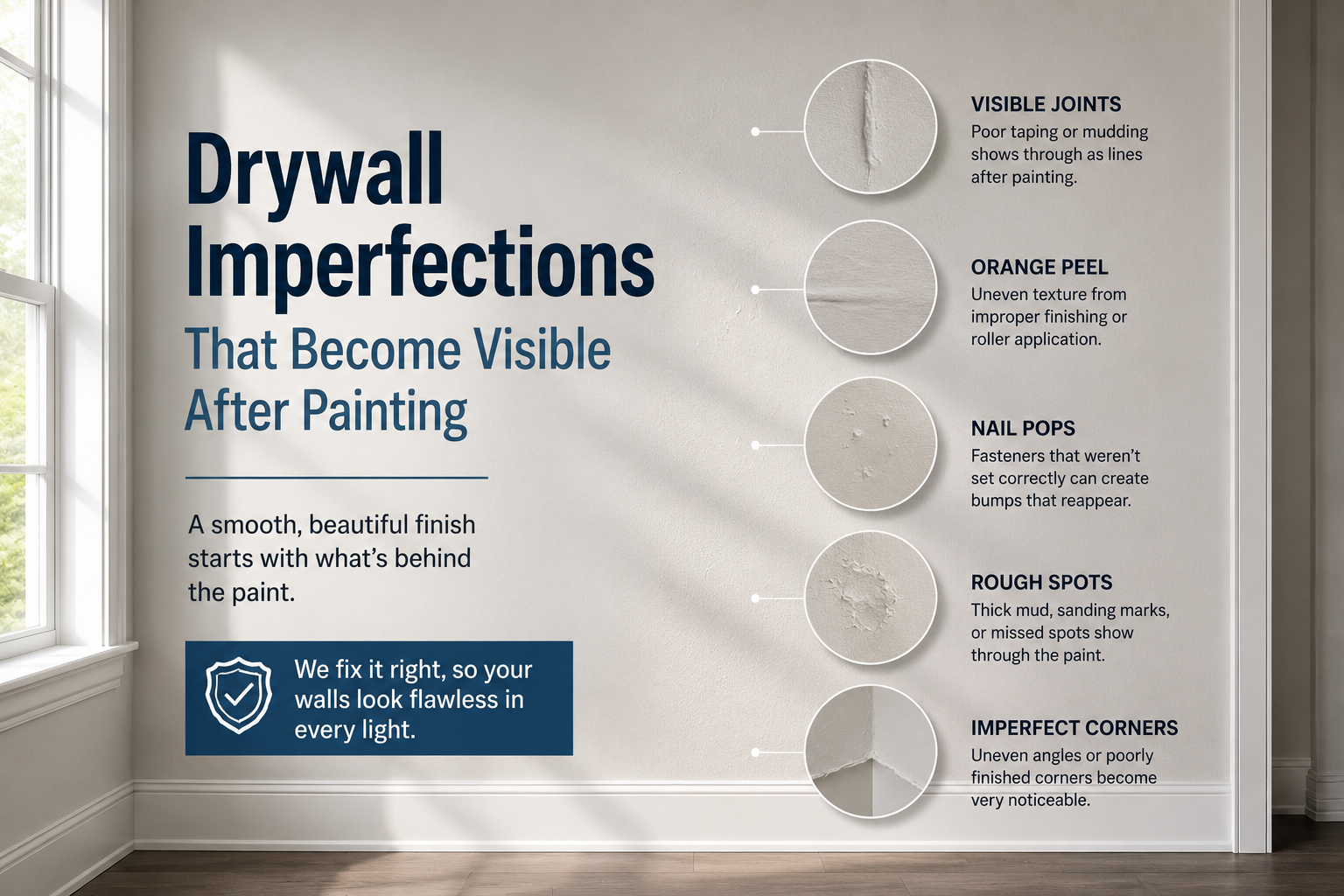
Fresh drywall can look perfectly smooth at first glance. However, once paint is applied—especially in rooms with lots of natural light—even minor imperfections become much more noticeable.
Some common drywall issues include:
- Uneven joints
- Visible seams
- Poorly feathered mudding
- Sanding marks
- Nail or screw pops
- Corner bead imperfections
- Surface waviness
Many homeowners don’t notice these flaws during construction because drywall compound and primer can hide them temporarily. Once the final paint colour goes on, especially darker shades or finishes with any sheen, these imperfections can suddenly stand out.
We’ve walked into countless projects where clients say:
“We didn’t notice that before the walls were painted.”
That’s because paint doesn’t hide flaws—it highlights them.
A professional painter spends time inspecting every surface before painting begins. Small corrections made early can dramatically improve the final appearance of the room.
Damage Caused During Construction

Even when drywall work is completed properly, other trades often continue working throughout the project.
Electricians install fixtures.
Plumbers complete finishing work.
Cabinet installers move large materials through hallways.
Flooring crews bring equipment in and out of rooms.
As a result, walls and ceilings frequently suffer small amounts of damage before painting is completed.
We regularly repair:
- Dents and dings
- Scratches
- Gouges in drywall
- Damaged corners
- Scuffed surfaces
- Ceiling repairs around light fixtures
- Holes left from changes during construction
These issues may seem minor individually, but together they can significantly affect the finished appearance of a home or commercial space.
Before painting, we carefully inspect all surfaces and make necessary repairs so the final result looks seamless.
Poor Surface Preparation From Rushed Jobs
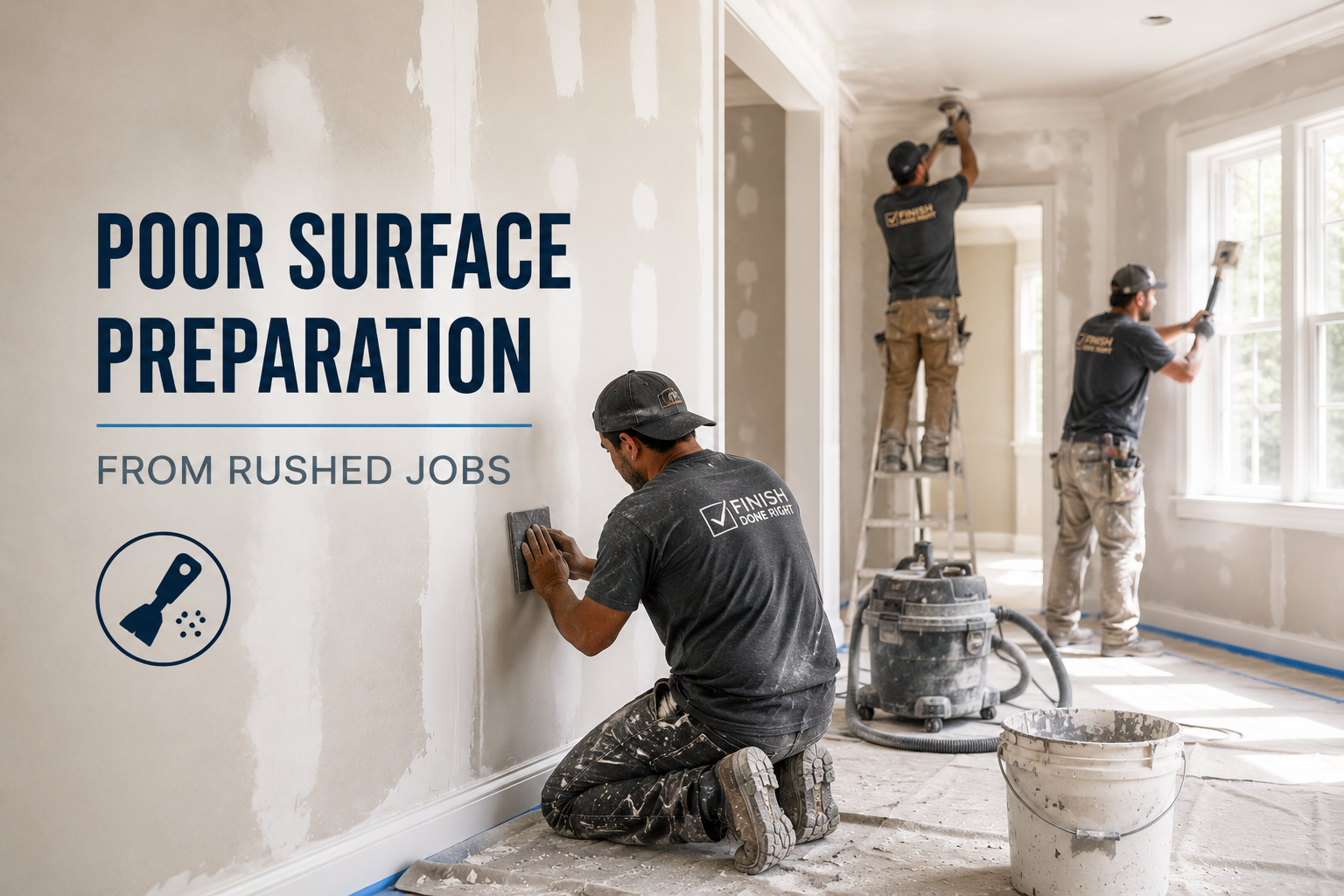
In today’s fast-paced construction environment, deadlines can sometimes take priority over quality.
When projects are rushed, preparation is often the first thing sacrificed.
Unfortunately, no amount of premium paint can compensate for poor prep work.
Some examples we commonly encounter include:
- Dust left on surfaces
- Incomplete sanding
- Poor patch repairs
- Unfilled nail holes
- Uneven caulking
- Paint applied over damaged surfaces
- Areas that were never properly primed
These shortcuts may save time initially, but they often create problems that become obvious once the project is complete.
Homeowners frequently contact us after noticing:
- Rough wall surfaces
- Visible patches
- Flashing or uneven paint appearance
- Peeling paint
- Poor adhesion
- Inconsistent finishes
Proper preparation may not be the most exciting part of painting, but it is what separates an average finish from a professional one.
Uneven Caulking and Trim Gaps
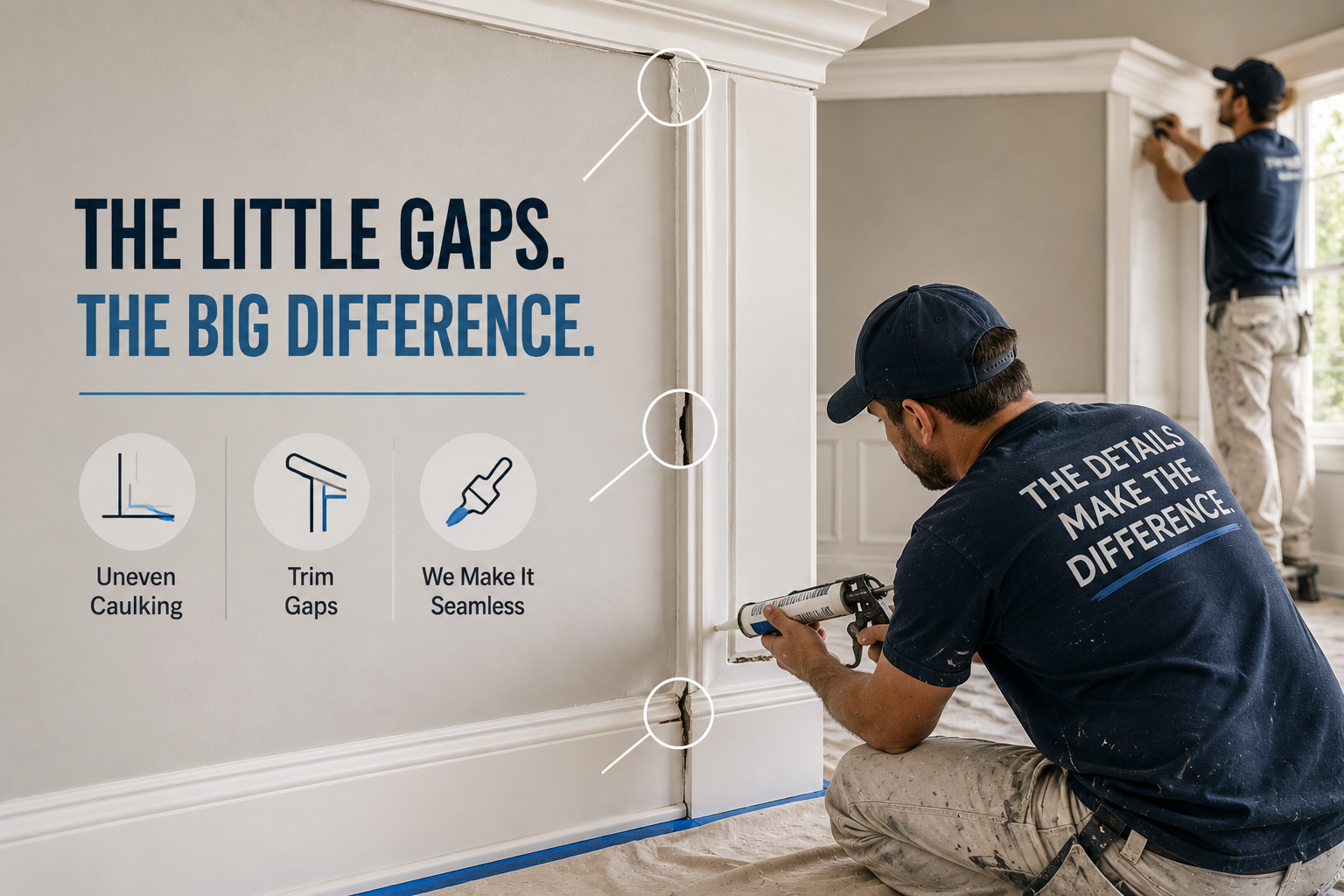
Trim work can dramatically enhance a room—but only when the finishing details are done correctly.
We often see:
- Gaps between trim and walls
- Inconsistent caulking lines
- Cracked caulking
- Nail holes that weren’t properly filled
- Rough trim surfaces
These small details may seem insignificant during construction, but once painted, they can become surprisingly noticeable.
A professional painting team takes the time to fill, caulk, sand, and refine these areas before applying paint, creating crisp, clean lines throughout the space.
Lighting Reveals Everything

One of the biggest surprises for homeowners is how much lighting affects the appearance of walls.
Natural sunlight, pot lights, pendant fixtures, and modern LED lighting can expose imperfections that weren’t visible during construction.
This is especially common in:
- Hallways
- Staircases
- Open-concept living spaces
- Large feature walls
- Home offices
- Rooms with oversized windows
We’ve had clients wonder why a wall looked perfect one day and flawed the next.
The answer is often lighting.
As professional painters, we inspect surfaces under different lighting conditions to identify imperfections before the final coat is applied.
Why Hiring Professional Painters Matters

Many people assume painting is simply about applying colour to walls.
In reality, a significant portion of our work involves correcting, preparing, repairing, and refining surfaces before painting even begins.
The best paint jobs aren’t just about what you see.
They’re about what was fixed beforehand.
A smooth, flawless finish comes from careful preparation, attention to detail, and years of experience identifying issues that others may overlook.
The Bottom Line
Painting is often the final step that brings a project together—but it’s also the stage where hidden imperfections become visible.
Whether it’s drywall flaws, construction damage, rushed preparation, or finishing details that were overlooked, professional painters frequently play a key role in correcting issues left behind by previous trades.
The result is a cleaner, smoother, and more polished space that homeowners, builders, and business owners can be proud of.
Need Help Getting Your Project Finished the Right Way?
At CAM Painters, we don’t just paint walls—we help ensure every surface looks its absolute best before the first coat goes on. If you’re planning a renovation, new build, office refresh, or home update, our team is here to deliver the professional finish your project deserves.
Contact us today for a free estimate and see the difference proper preparation can make.